Archives for November 2025

OAHS Welcomes Dr. Amber Nielsen to Medical Staff

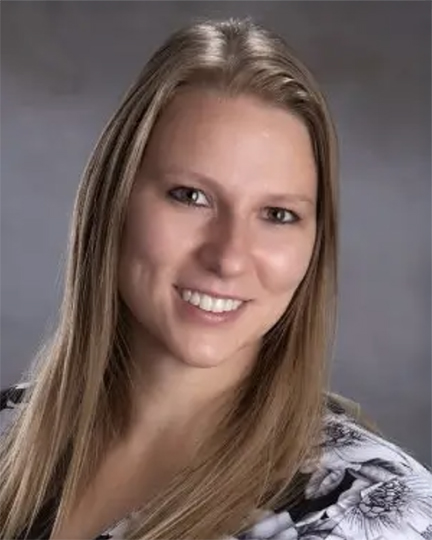
Ortonville Area Health Services is pleased to announce that Dr. Amber Nielsen will be joining the medical staff at Northside Medical Clinic and OAHS, with her practice set to begin in February 2026. Dr. Nielsen was recruited with the assistance of the Big Stone Health Care Foundation, a partnership that has brought more than twenty-five providers to the Big Stone Lake area.

Dr. Nielsen is a family medicine physician with surgical obstetrics skills, currently practicing in Roseau, Minnesota. She provides care to patients of all ages, from newborns to older adults, and has a particular interest for obstetrics, including performing C-section deliveries.

Dr. Nielsen earned her medical degree from the University of North Dakota School of Medicine and Health Sciences. She completed her Family Medicine Residency at Idaho State University in Pocatello, Idaho, where she focused on rural medicine. To further expand her obstetric skills, she went on to complete an Obstetrics Fellowship at Essentia Health in Duluth, Minnesota, where she gained advanced training in high-risk obstetric care and surgical deliveries.

Since 2021, Dr. Nielsen has been part of LifeCare Medical Center in Roseau, where she has built a strong reputation for her compassionate, patient-centered care and dedication to rural health.

“We are excited to welcome Dr. Nielsen to our team,” said Dr. Susan Andersen, OAHS Chief Medical Officer. “Her skills in family medicine and obstetrics will be a tremendous asset to our patients and community. We look forward to the expertise and dedication she brings.”

Dr. Nielsen will begin seeing patients at Northside Medical Clinic in February 2026.
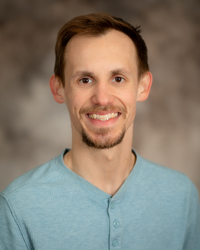
Mark Miller, LPC, Achieves ADHD-Certified Clinical Services Provider Credential

Mark Miller, Licensed Professional Counselor

Mark Miller, Licensed Professional Counselor

Ortonville Area Health Services announces that Mark Miller, Licensed Professional Counselor (LPC) at Northside Medical Clinic and the Trojan Clinic within Ortonville Schools, has earned the ADHD-Certified Clinical Services Provider (ADHD-CCSP) credential from Evergreen Certifications. The certification, awarded on November 11, 2027, recognizes Mark’s advanced training in the assessment and treatment of Attention Deficit Hyperactivity Disorder (ADHD).

The ADHD-CCSP credential is awarded to licensed professionals who demonstrate advanced knowledge and clinical skills in supporting individuals with ADHD. Candidates must complete rigorous continuing education focused on ADHD assessment, evidence-based interventions, psychopharmacology, and community strategies. This accomplishment establishes Mark as a leader in helping clients overcome the emotional, behavioral, and academic challenges associated with ADHD.

As a Licensed Professional Counselor at Northside Medical Clinic and the Trojan Clinic, Mark provides compassionate care to children, adolescents, and adults. This new credential further enhances the clinic’s capacity to deliver specialized services, ensuring that patients and families receive the most current, evidence-based support for ADHD.

Mark states, “I am truly honored to have achieved the ADHD-Certified Clinical Services Provider credential. This certification reflects my commitment to supporting individuals and families navigating the challenges of ADHD. I believe that with the right tools, understanding, and support, every person with ADHD can thrive. I look forward to using this advanced training to make a meaningful difference for our patients and our community.”

Congratulations to Mark on this certification and on the positive impact it will bring to the clinics and communities he serves.

Epilepsy Awareness

November is National Epilepsy Awareness Month. Epilepsy is the fourth most common neurological disease in the U.S., yet it remains misunderstood by many. Below are five facts everyone should know about epilepsy.

1. Epilepsy is a neurological disorder.
Epilepsy is a neurological disorder in which brain activity becomes abnormal, causing seizures or periods of unusual behavior. It is diagnosed when a person has two or more seizures that cannot be attributed to another condition.

2. Often times, the cause of these seizures is unknown.
The four most common causes of epilepsy are head trauma, stroke, brain tumor, and brain infection. However, the cause of epilepsy is unknown in about 70 percent of cases.

3. Epilepsy can occur at any age.
It is most common, however, in children and older adults.

4. Seizure symptoms can vary widely.
Since epilepsy is caused by abnormal activity in the brain, seizures can affect any process the brain coordinates. This means that symptoms can appear in a variety of different ways. However, most people with epilepsy tend to have the same type of seizure every time.

These symptoms include temporary confusion, staring spells, uncontrollable jerking movements, loss of consciousness or awareness, hallucinations, speech impairment, or psychiatric symptoms such as fear, anxiety or déjà vu.

5. Approximately three million Americans have epilepsy.
One in 26 people in the U.S. will develop epilepsy in their lifetime.

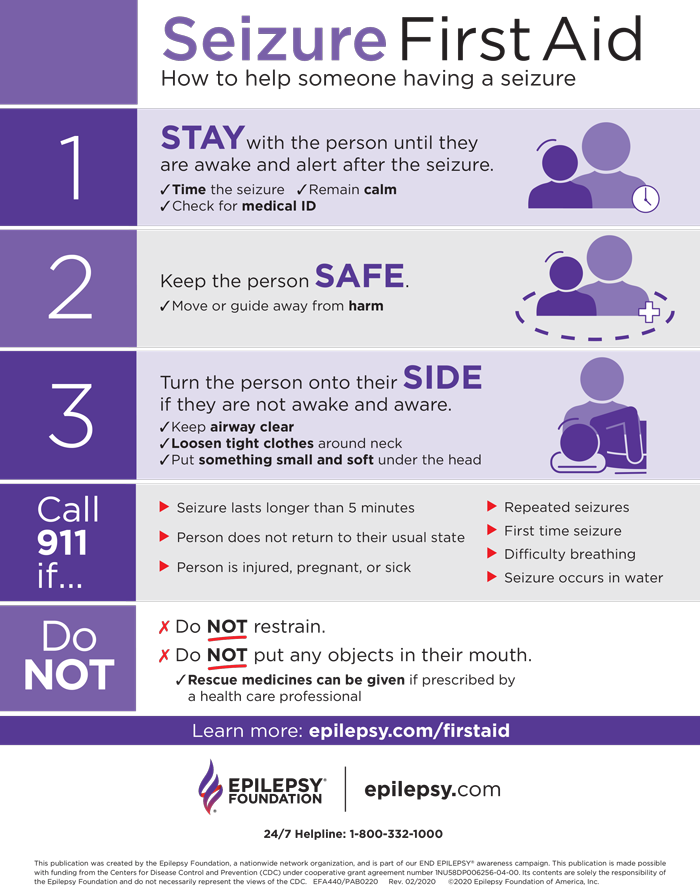
How to care for a person having a seizure?

Safe Sleep Practices for Infants

Infant Safe Sleep Week in Minnesota is November 16·21, 2025, a time to raise awareness about unsafe sleep environments and practices that increase the risk of infant injury or death. The Minnesota Department of Health is encouraging parents to follow the ABCs of safe sleep: babies should be put to sleep alone in a bare crib, and always on their back.

Alone: Infants should sleep alone in their own space, without any other people or pets.

BARE: A crib should be bare with no blankets, pillows, or toys.

BACK: A baby should always be placed on their back for sleep or naps.

CRIB: Use a safety-approved crib, bassinet, or play yard with a firm, flat mattress and a tightly fitted sheet.

Minnesota infant safe sleep guidelines

  • Back: Always place your baby on their back to sleep for every nap and at night.
  • Alone: A baby should sleep alone in their own sleep space, without any other people, pets, or stuffed animals.
  • Crib: The baby should sleep in a crib, bassinet, or play yard with a firm, flat mattress and a fitted sheet.
  • No loose bedding: Do not use blankets, pillows, quilts, or bumpers in the baby’s sleep area, as they can be a suffocation hazard.
  • Room-sharing without bed-sharing: Keep the baby’s sleep area in the same room where you sleep for at least the first six months, but on a separate surface.
  • Avoid overheating: Dress your baby in light sleep clothing and keep the room at a comfortable temperature.
Translate »