Ortonville Area Health Services (OAHS) has earned first place in the Cost category at the Sanford Improvement Symposium for its work to expand access to MRI services in the region. The Sanford Improvement Symposium is an annual event that recognizes healthcare teams for projects that improve patient care, safety, and efficiency.
The project focused on improving the availability of MRI services at OAHS by establishing a dedicated MRI unit. Previously, OAHS relied on a mobile MRI unit that was available only two days a week. This limited schedule, along with the possibility of weather-related delays in getting the mobile unit on site, could postpone outpatient scans and create additional challenges for patients needing timely imaging. Additionally, patients requiring emergency MRI scans for possible stroke or trauma sometimes had to travel by ambulance or air to larger medical centers in Fargo or Sioux Falls. These transfers added time, expense, and stress for patients and their families.
OAHS launched on-site MRI services using a dedicated MRI unit in September 2025 with support from a Minnesota Department of Health Rural Hospital Capital Improvement Grant, capital funding, and a pay-per-scan equipment lease model. Early results show strong community demand, including a 70.59% increase in June MRI volume compared with mobile service, projected annual volume above 750 scans, and an estimated $432,000 in annual cost avoidance for patients and insurers.
Most importantly, local MRI services make it easier for patients to get the care they need. Patients can spend less time traveling and waiting for scans, and providers can get the timely information they need to make treatment decisions sooner. For people with urgent medical concerns, such as a possible stroke, local MRI access can help providers assess patients and determine the next steps in care more quickly.
The OAHS MRI Project shows how a rural hospital can improve access to advanced medical services, enhance the patient experience by reducing travel and wait times, and help lower costs for patients and insurance providers.
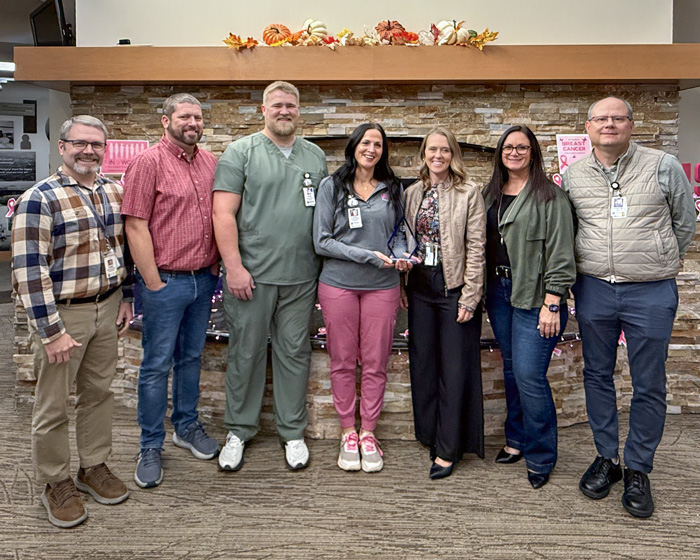
Pictured: Shane Ayres, Chief Financial Officer; Tyler Gall, IT Manager; Wylie Pullis, Radiologic Technologist ; Lacey Busack, Radiology Manager; Sara Tollakson, Quality and Patient Safety Coordinator; Nicole Wood, Executive Assistant; Dr. Al Ross, Chief Executive Officer.
 Careers
 Facilities
 FAQs
 Foundation
 My Chart
